What if unlocking the full potential of half the population could boost a nation’s wealth by over 50%?
This isn’t a hypothetical question for the Middle East. Recent research shows closing gender employment gaps could lift per capita income by 51% in a typical country there.
The World Bank is launching a major new plan for the region. The Regional Gender Action Plan (RGAP 2025-2030) aims to tackle critical barriers to inclusion.
Significant progress has been made in several nations. Yet, complex challenges remain. This analysis explores how empowering women serves as a vital catalyst for long-term stability and growth.
By focusing on economic opportunities, leaders can unlock the latent potential of the female workforce. This drives innovation and community development across the region.
Key Takeaways
- The World Bank’s Regional Gender Action Plan targets critical inclusion barriers from 2025 to 2030.
- Closing gender gaps in employment could increase a typical country’s per capita income by 51%.
- Women’s economic participation is a key driver for regional stability and prosperity.
- Policymakers can spur innovation by creating more economic opportunities for women.
- Despite notable progress, sustained and collaborative policy action is still needed.
- Women are actively navigating structural constraints to redefine their roles in society.
- A clear roadmap exists for stakeholders committed to advancing gender equality.
Overview of Trends in Women’s Empowerment in MENA
While educational attainment for women has soared, their integration into the formal workforce tells a different story across the Middle East North Africa. The region currently has the world’s lowest female labor force participation rate at 19%, far below the global average of 48%.
Historical patterns of industrialization and resource wealth have deeply shaped this economic landscape.
Historical and Contemporary Perspectives
The Middle East North Africa landscape features diverse economic models. These range from oil-rich Gulf states to nations impacted by conflict.
Understanding this history is key. It explains why structural barriers to female inclusion have persisted despite modernization in many areas.
Women have made clear strides in education. Yet their participation in the formal economy remains lower than in other parts of the world.
Key Drivers of Change in the Region
National reform agendas are a major force. Many countries now prioritize diversifying the workforce and moving beyond male-dominated sectors.
There is growing recognition that gender equality is a fundamental requirement for economic resilience, not just a social goal.
Men are increasingly seen as essential allies in shifting societal norms to support women in the workplace.
The progress made shows targeted policy can dismantle long-standing barriers. Rapid change is visible where women enter new sectors, though the pace varies by country.
Statistics on Women’s Empowerment in MENA: Data Highlights
Recent data reveals a striking contrast between academic success and economic inclusion for women in the Middle East and North Africa. The numbers show clear advances in learning but slower progress in job markets.
Educational Achievements and Rising Tertiary Enrollment
Women in the region now average one more year of school-adjusted learning than men. This edge is visible in higher education.
Forty-three percent of women are enrolled in tertiary programs, compared to 39% of men. This indicates a strong foundation of knowledge and skill.
Academic outperformance by women is a consistent trend across many countries. It creates a large pool of talented graduates ready for the workforce.
Employment Rates and Labor Force Dynamics
Despite high education levels, a significant gender gap persists in the labor market. The transition from classroom to career remains challenging.
In Saudi Arabia, the female labor force participation rate jumped from 22% to 35% in a few years. This exceeded government targets and shows reform can work.
Barriers like affordable childcare and safe transport often hinder participation. For every woman who enters, structural issues can limit long-term employment.
These figures underscore the urgent need for policies. The goal is to translate educational gains into sustainable opportunities.
Labor Market Challenges and Opportunities
Labor markets in the Middle East North Africa region are at a crossroads. They balance deep-seated challenges with emerging opportunities for growth.
For many, the path to a job is blocked by old rules and attitudes. Yet new policies are creating openings for change.
Barriers to Workforce Entry and Persistent Gaps
Discriminatory laws often limit mobility and economic agency. This creates a significant gender gap in employment.
Affordable childcare and safe transport remain hurdles. These issues affect the force participation of many seeking work.
Persistent gaps show that education alone does not guarantee job access. Structural changes are needed across the region.
Policy Initiatives in Gulf and Conflict-Affected Countries
In Saudi Arabia, recent legal reforms have successfully removed barriers. This led to a notable rise in female participation.
Jordan aims to double its female labor force participation rate by 2033. The World Bank supports this through operations improving finance access.
Gulf states show how targeted investment can improve workforce conditions. Conflict-affected countries in North Africa struggle with stability while pursuing reforms.
These initiatives highlight the progress made. They create new opportunities for women and men to build fairer economies.
Legal Reforms and Societal Attitudes Driving Change
Legal frameworks are undergoing a quiet revolution across the Middle East and North Africa. This shift is reshaping the landscape for economic and social participation.
Change is now driven by both top-down policy and evolving public perception. Together, they create a powerful force for advancement.
Impact of Family Laws and Inheritance Regulations
Reforms in family and property law are crucial for economic agency. They directly affect a woman’s ability to own assets and build wealth.
In Egypt, the government prioritizes women-headed households for housing subsidies. This policy helped increase the female share of housing owners to 20%.
Across the region, family laws are being scrutinized. The goal is to ensure rights are protected regarding inheritance and property ownership.
Shifts in Social Norms and Public Perceptions
New legislation often reflects and accelerates changing attitudes. The United Arab Emirates introduced equal-pay and anti-discrimination laws between 2018 and 2022.
These laws strengthen employment rights and set a new standard. Saudi Arabia‘s removal of male-guardian consent requirements also led to rapid change.
In North Africa, the shift in social norms is steady but slower. More girls pursue higher education than in previous years, gradually influencing views.
Improving conditions for women in businesses requires a holistic approach. It combines legislative action with a shift in public attitude to close the gender gap.
Women in Leadership and Political Representation
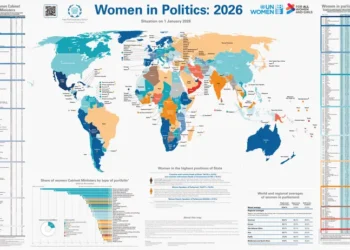
Historic appointments and legislative mandates are rapidly changing the face of leadership in the Arab world. The push for greater female inclusion in politics is gaining momentum, moving beyond symbolic gestures to substantive roles.
Electoral Quotas and Policy Interventions
Policy tools like electoral quotas have proven highly effective. The United Arab Emirates set a global benchmark by mandating 50% female representation in its Federal National Council.
Such laws create a structural pathway for women. They ensure that women’s rights and perspectives are embedded in national governance from the start.
Across North Africa and the wider region, similar interventions are being adopted. They guarantee a minimum level of participation and accelerate change.
Pioneering Women Leaders and Their Impact
Individual leaders are breaking ceilings and setting powerful examples. In 2021, Tunisia appointed Najla Bouden as the first female prime minister in the Arab world.
In Saudi Arabia, women are increasingly visible in senior government and corporate roles. Their presence actively dismantles long-standing professional barriers.
This visibility is crucial for empowerment. When girls see women in high office, it expands their vision for their own education and future. These pioneers prove that diverse leadership leads to more effective policies for all.
Economic Empowerment and Entrepreneurship Initiatives
Entrepreneurship is emerging as a powerful pathway for women to claim economic independence across the Arab world. Turning an idea into a successful venture requires strong support systems and capital.
Support Structures and Access to Finance
The World Bank provides critical backing. Its Regional Network in Energy for Women boosts female participation in that sector.
In Morocco and Tunisia, the institution helps women-led startups access private equity. This funding is vital for new businesses to grow.
Financial literacy education is also key. It gives female founders the tools to manage their ventures effectively.
Innovative Strategies for Overcoming Structural Barriers
Digital platforms and crowdfunding help bypass traditional banking hurdles. These methods are popular in North Africa.
In Saudi Arabia, new initiatives tackle legal and social barriers head-on. This allows female entrepreneurs to scale their operations.
Protecting women’s rights to property and credit is fundamental. Updated laws are crucial for closing the gender gap in finance.
This focus on empowerment creates more opportunities. As women become leaders, they inspire others and boost the entire country‘s economic force participation.
Conclusion
A new chapter of economic inclusion is being written across the Arab world, where women’s talents are increasingly recognized as vital assets. The progress in Saudi Arabia demonstrates how targeted policy reform can rapidly boost female force participation.
Closing the persistent gender gap demands a collective effort. Governments, businesses, and men must work together to dismantle the barriers that limit potential.
Sustained investment in education and quality employment opportunities is essential. This ensures women can fully contribute to the region‘s growth and stability.
Advocating for workplace rights and equal access to resources protects these gains. The future prosperity of all countries depends on fostering true empowerment.
By continuing this collaborative path, current trends can solidify into lasting equality. This will unlock the full economic force of every citizen.
FAQ
Is there progress for women in the Middle East and North Africa?
Yes, significant progress has been made, particularly in education and legal reforms. Countries like Saudi Arabia, the United Arab Emirates, and Jordan have implemented changes to boost female participation in the workforce and public life. While challenges remain, the trajectory is toward greater empowerment.
How are women doing in higher education across the region?
Young women are excelling. In many nations, including Saudi Arabia and Qatar, female enrollment in tertiary education now surpasses that of men. This creates a strong pipeline of skilled talent ready to enter the job market and drive economic growth.
What keeps the female labor force participation rate low in some areas?
A> Several barriers persist, including restrictive social norms, limited mobility, and unequal care responsibilities. Legal constraints in some countries also hinder a woman’s ability to work without a guardian’s permission or to freely choose her profession.
What role do legal reforms play in empowering women?
Changes to family and inheritance laws are crucial. Reforms in Tunisia, Morocco, and Jordan have strengthened women’s rights within marriage and divorce. Updating these regulations is a fundamental step toward achieving gender equality and economic justice.
How are Gulf countries like the UAE promoting female employment?
Gulf nations are actively creating opportunities through policy. The UAE and Saudi Arabia have launched national visions with clear targets for women in leadership and the workforce. They are expanding sectors like technology and finance, where women are increasingly prominent.
Can quotas help increase women’s political representation?
Electoral quotas have proven effective. Countries such as Algeria and Tunisia use them to ensure a minimum number of women in parliament. This policy intervention has rapidly increased the number of female legislators, giving women a direct voice in governance.
What support exists for female entrepreneurs in MENA?
A> Networks are growing. Organizations like Womena in the UAE and programs supported by the World Bank provide mentorship, training, and access to finance. These initiatives help women launch and scale businesses, overcoming traditional barriers to funding.
Are societal attitudes toward working women changing?
Public perception is shifting, especially among younger generations. Surveys show increasing support for women in leadership roles and the workforce. This cultural change, alongside legal reforms, is essential for sustainable progress in gender equality.